
24/7
Available For Emergency Services
Foundations That Support Long-Term Structures
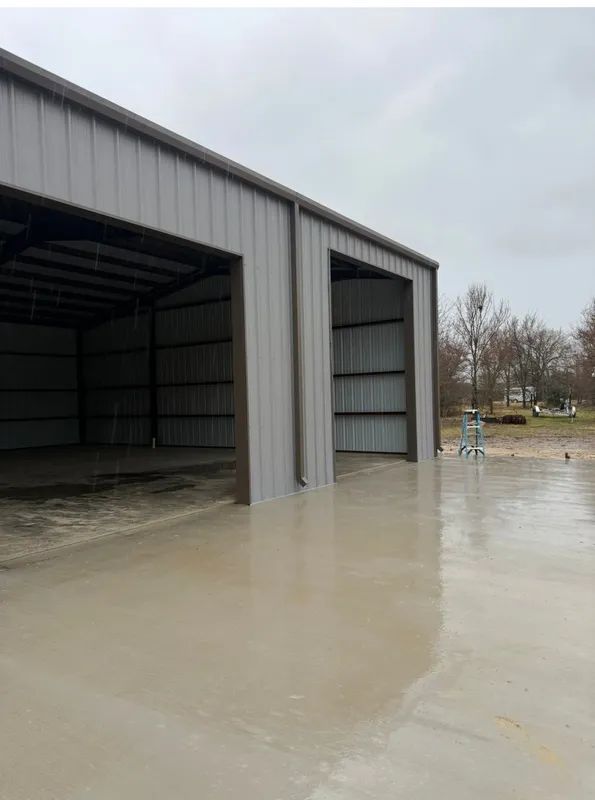
Concrete Installation in Meridian for slabs, driveways, and structural bases handling heavy loads and weather cycles
Concrete fails when the subgrade isn't properly prepared, when the mix doesn't match the application, or when curing happens too quickly under direct sun and wind exposure common across Texas ranch properties. SteelTex Construction LLC handles concrete installation for foundations supporting metal buildings, approach slabs for equipment storage, and driveways subjected to loaded trailers and heavy machinery. The work involves evaluating soil conditions, preparing a stable base, and placing concrete mixed and finished to handle the specific load and exposure conditions of each project. Proper site preparation prevents settling, cracking, and surface degradation that compromise function and require costly repairs within the first few years.
The installation process includes excavating to stable subgrade, compacting base material to prevent voids, and forming edges so the slab maintains correct thickness and shape during the pour. Concrete is placed and finished with attention to slope for drainage, surface texture for traction, and curing methods that allow proper strength development before the surface is loaded. Each project is built to handle the intended use rather than relying on generic thickness and reinforcement specifications that may not suit the application.
Request a site assessment to determine base preparation requirements and concrete specifications for your project.
What Separates Reliable Concrete from Premature Failure
Concrete strength develops through proper water-to-cement ratio, adequate curing time, and reinforcement placed correctly within the slab thickness rather than sitting on the subgrade where it provides no structural benefit. Expansive clay soils require thicker base layers and sometimes additional reinforcement to resist cracking caused by seasonal soil movement, and poorly drained subgrades lead to voids that allow sections of the slab to settle unevenly. Finishing techniques affect surface durability, with overworked surfaces that bring excess water to the top creating weak zones prone to scaling and spalling during freeze-thaw cycles.
Once the concrete cures, you'll notice the surface remains level without dips or high spots, water drains away from structures instead of pooling, and the slab supports equipment weight without cracking or settling at edges. Driveways handle trailer traffic without rutting, building foundations remain stable as structures are erected, and the concrete surface withstands years of exposure without significant deterioration. The difference becomes clear when comparing properly installed slabs that age without issues to those requiring patching or replacement within a few seasons.
Concrete installation doesn't prevent all cracking, particularly in expansive soils or where large temperature swings create contraction stress, but control joints placed strategically guide cracks to designated locations rather than allowing random fractures across the slab. Timing for the pour matters as well, since extreme heat or freezing conditions affect curing and can compromise final strength regardless of mix quality or finishing technique.
Questions Before Starting Your Project
Property owners planning concrete work often need clarity on design choices, site preparation steps, and how different factors influence project timelines and long-term performance.
What thickness is required for concrete supporting metal buildings or heavy equipment?
Slab thickness depends on load distribution and soil conditions, but most equipment storage and building foundations use at least four to six inches of reinforced concrete, with thicker sections at high-load points or where soil stability is questionable.
How does Meridian's clay soil affect concrete installation and performance?
The region's expansive clay swells when wet and shrinks during dry periods, creating movement that can crack slabs if the base isn't properly prepared with compacted aggregate that isolates the concrete from direct soil contact and allows drainage.
When is the best time to pour concrete in Central Texas?
Moderate temperatures in spring and fall provide ideal curing conditions, while summer heat requires shading, moisture retention, and careful timing to prevent rapid surface drying, and winter work demands protection from freezing until the concrete reaches sufficient strength.
How long before concrete can support vehicle traffic or building loads?
Initial foot traffic is possible within a day or two, but full strength develops over weeks, so heavy loads should wait at least seven days and preferably longer depending on weather conditions and the specific mix used for the project.
What site preparation is needed before concrete installation begins?
The area must be cleared, graded to proper slope, excavated to design depth, and filled with compacted base material, with forms set to correct elevations and any required plumbing or electrical lines installed before the pour occurs.
SteelTex Construction LLC evaluates soil conditions, drainage patterns, and project-specific load requirements to ensure concrete installations perform reliably for decades. Call (254) 978-2737 to discuss your project and schedule a site evaluation.